
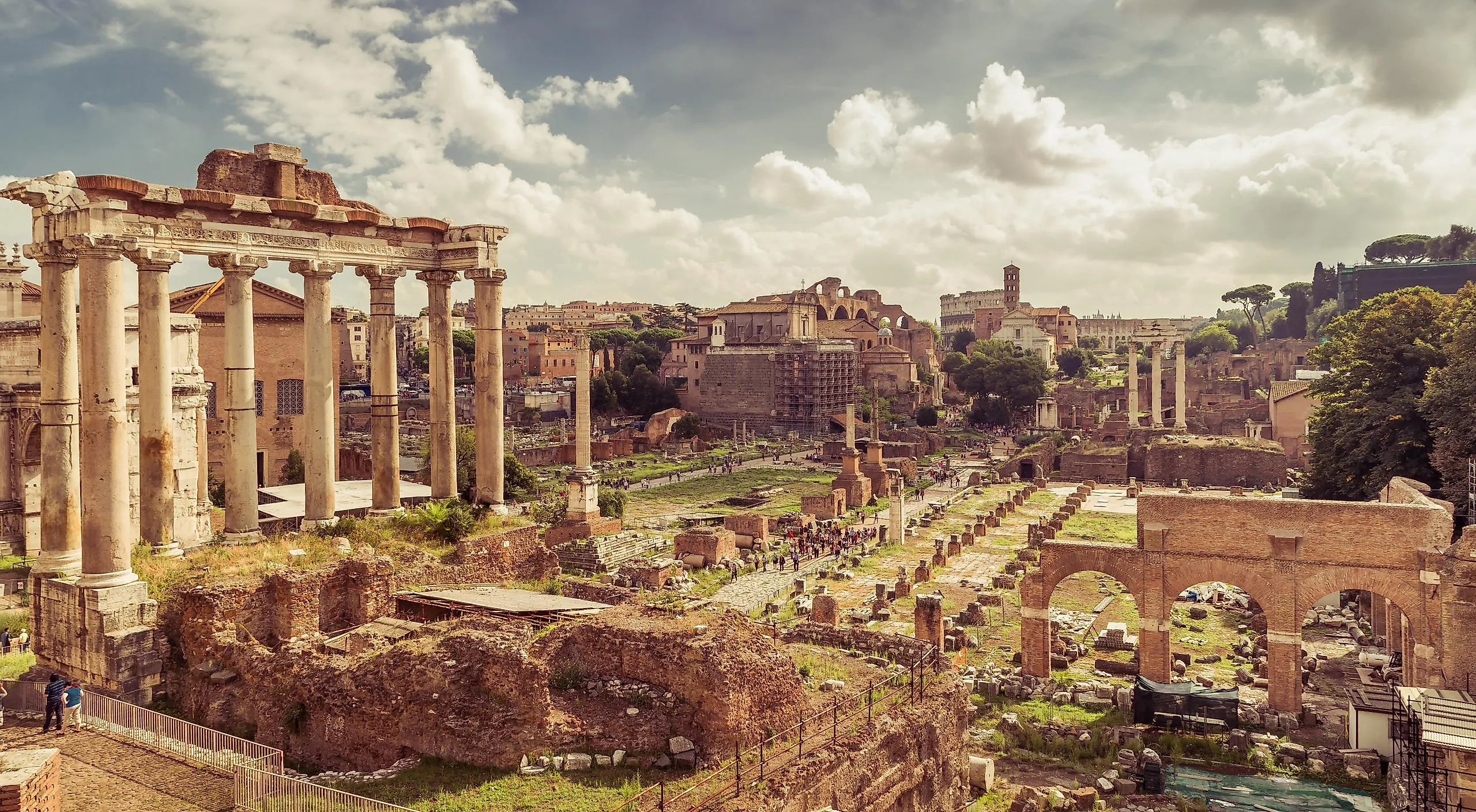

Standard history textbooks frequently repeat the same grand narrative of antiquity: the Rise of Egypt along the Nile, the rise of Mesopotamia between the Tigris and Euphrates, the splendor of Classical Greece, and the immense legal and military machinery of the Roman Empire.
While these civilizations indisputably shaped the modern world, focusing exclusively on them leaves out massive chapters of human history.
Across Africa, Asia, the Americas, and Eurasia, powerful empires once commanded vast trade routes, pioneered groundbreaking engineering, built formidable armies, and governed millions of citizens—only to be overshadowed in mainstream historical memory.
Here is a look at 5 incredible ancient empires that deserve a prominent place in our collective history.
1. The Kingdom of Aksum (Axum)
Peak Era: ~100 AD – 940 AD
Region: Modern-Day Ethiopia, Eritrea, Djibouti, and parts of Yemen
At its apex, the Kingdom of Aksum was recognized by Persian philosopher Mani as one of the four great powers of the ancient world—alongside Rome, Persia, and China.
┌─────────────────────────────────────────────────────────────┐
│                   THE KINGDOM OF AKSUM                      │
├───────────────────────────────┬─────────────────────────────┤
│   GEOGRAPHIC REACH            │   KEY ACHIEVEMENTS          │
│   • Red Sea Maritime Trade    │   • First African Minted    │
│   • Horn of Africa to Southern│     Currency                │
│     Arabian Peninsula         │   • Monolithic Obelisks     │
│                               │   • Early Christian Empire  │
└───────────────────────────────┴─────────────────────────────┘
Why They Were Formidable:
-
Maritime Trade Powerhouse: Positioned along the Red Sea, Aksum linked major trade networks between the Roman Empire and Ancient India. They traded gold, ivory, agricultural produce, and emeralds.
-
Architectural Marvels: The Aksumites constructed massive monolithic obelisks (stele) out of single blocks of solid granite—such as the Stela of Aksum—which remain engineering wonders today.
-
Financial Innovation: Aksum was the first sub-Saharan African empire to mint its own gold, silver, and bronze coinage, inscribed in Ge’ez and Greek to facilitate international commerce.
2. The Elamite Empire
Peak Era: ~2700 BC – 539 BC
Region: Southwestern Iran (Khuzestan and Ilam provinces)
Existing alongside the Sumerians, Babylonians, and Assyrians, Elam was one of the earliest urban civilizations of the Ancient Near East. Despite wielding enormous influence in Mesopotamian geopolitics for over two millennia, Elam is frequently relegated to a footnote in modern history courses.
Why They Were Formidable:
-
Military Rival to Mesopotamia: The Elamites repeatedly invaded and influenced Mesopotamian politics—famously sacking the city of Ur around 2004 BC and carrying off the legendary Stele of Hammurabi to their capital at Susa.
-
Unique Script and Culture: They developed their own distinct writing system (Proto-Elamite and Linear Elamite) and maintained an independent cultural, artistic, and religious identity distinct from Semitic and Indo-European neighbors.
-
Choqa Zanbil: They constructed one of the best-preserved ziggurats in the world, the Chogha Zanbil, built around 1250 BC under King Untash-Napirisha.
3. The Caral-Supe (Norte Chico) Civilization
Peak Era: ~3000 BC – 1800 BC
Region: Coastal Peru
When we think of ancient South America, the Inca Empire usually dominates the discussion. Yet, thousands of years before the Inca, the Caral-Supe civilization flourished along the arid coast of Peru.
Why They Were Formidable:
-
Older Than the Pyramids: Emerging around the same time as the Early Dynastic Period of Egypt, Caral-Supe is the oldest known complex society in the Americas.
-
Peaceful Urban Planners: Unlike almost all other ancient urban centers, archaeological excavations of Caral have revealed no signs of defensive walls, weapons, or warfare-damaged remains. Instead, their society thrived on trade, music, and agriculture.
-
Architectural Complexities: They constructed stepped platform pyramids, sunken circular plazas, and complex irrigation systems long before the invention of ceramic pottery in the region.
4. The Bactria-Margiana Archaeological Complex (BMAC) / Oxus Civilization
Peak Era: ~2250 BC – 1700 BC
Region: Modern-Day Turkmenistan, Northern Afghanistan, Southern Uzbekistan, and Western Tajikistan
Hidden deep within the Central Asian deserts along the Oxus River (Amu Darya), the BMAC / Oxus Civilization was a sophisticated Bronze Age urban society that remained completely unknown to modern archaeology until the mid-20th century.
Why They Were Formidable:
-
Fortified Oasis Cities: The Oxus people constructed large, heavily fortified city complexes featuring thick mud-brick walls, corner towers, and organized urban grids designed for desert resilience.
-
Master Metalworkers: They possessed advanced metallurgy, producing intricate bronze and silver jewelry, stone sculptures, and ceremonial axes decorated with mythological creatures.
-
Silk Road Precursors: Positioned at the crossroads of Eurasia, BMAC functioned as an early hub linking trade between the Indus Valley Civilization, Mesopotamia, and the Iranian Plateau.
5. The Champa Kingdom
Peak Era: ~192 AD – 1832 AD
Region: Central and Southern Vietnam
For over fifteen centuries, the Kingdom of Champa dominated the coastal waters and trade channels of Southeast Asia, acting as a crucial maritime bridge between India, China, and the Malay Archipelago.
Why They Were Formidable:
-
Masters of the Sea: The Cham were expert seafarers who controlled vital maritime trade routes in the South China Sea, engaging in lucrative trade in spices, sandalwood, silk, and ivory.
-
Architectural Legacy: Influenced heavily by Indian culture and Hinduism, the Cham built striking brick temple complexes—such as the UNESCO World Heritage site Mỹ Sơn—dedicated to Shiva and other deities.
-
Enduring Resilience: Champa maintained its independent cultural identity for over a millennium, successfully defending its territory across centuries against invasions from the Khmer Empire, the Mongol Yuan Dynasty, and neighboring states.
Final Thoughts
History is often written by the victors, and the memory of ancient societies is frequently shaped by which artifacts survive and which scholars document them.
By looking beyond standard historical frameworks and rediscovering empires like Aksum, Elam, Caral-Supe, BMAC, and Champa, we gain a far richer, more balanced understanding of human ingenuity, diversity, and achievement across antiquity.