
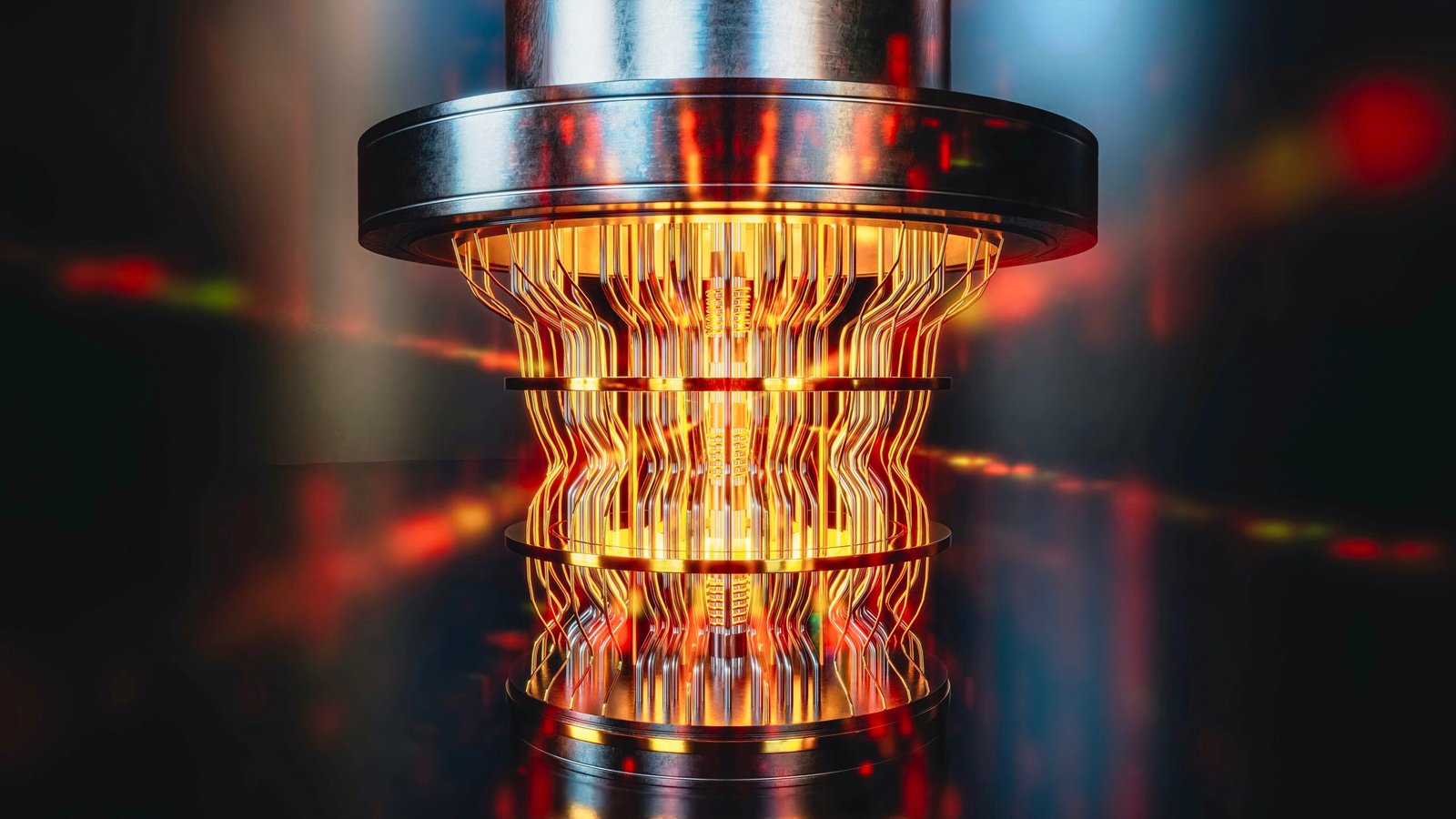

For decades, the world of computing has been driven by Moore’s Law—the steady, predictable doubling of transistors on silicon chips. Classical computers have powered our smartphones, enabled global communication networks, and sent spacecraft beyond our solar system.
However, we are rapidly approaching the physical limits of traditional silicon.
Enter quantum computing. Rather than operating as merely a faster version of a traditional supercomputer, quantum computing represents an entirely new computational paradigm built on the counterintuitive laws of quantum mechanics.
From cracking modern encryption to accelerating life-saving drug discovery, quantum technology promises to solve complex problems in minutes that would take classical supercomputers thousands of years.
Here is a clear breakdown of how quantum computing works and why it will revolutionize our digital landscape.
1. Classical Bits vs. Qubits: The Fundamental Difference
To understand the power of quantum computing, we must first look at how classical computers process information.
┌─────────────────────────────────────────────────────────────┐
│                    CLASSICAL VS. QUANTUM                    │
├───────────────────────────────┬─────────────────────────────┤
│   CLASSICAL BIT               │   QUANTUM QUBIT             │
│   • Binary State (0 OR 1)     │   • Superposition (0 AND 1) │
│   • Sequential Processing     │   • Parallel Processing     │
│   • Deterministic             │   • Probabilistic           │
└───────────────────────────────┴─────────────────────────────┘
-
Classical Bits: Everyday devices process data using binary units called bits, which act like simple light switches—existing strictly as a 0 or a 1.
-
Quantum Qubits: Quantum computers use qubits (quantum bits). Thanks to subatomic physical properties, a qubit can exist as a 0, a 1, or any proportion of both simultaneously.
Imagine navigating a complex maze. A classical computer explores one path at a time, backing up when it hits a dead end until it finds the exit. A quantum computer can evaluate every single path simultaneously, identifying the solution almost instantly.
2. The Core Mechanics Behind Quantum Power
Three key principles of quantum mechanics give qubits their extraordinary processing capabilities:
A. Superposition
Superposition allows qubits to hold multiple potential states at once. While 2 classical bits can represent only 1 of 4 possible combinations ($00, 01, 10, 11$) at a given moment, 2 qubits in superposition can hold all 4 combinations at the same time. As you add more qubits, the computational power scales exponentially ($2^n$).
B. Entanglement
Albert Einstein famously referred to entanglement as “spooky action at a distance.” When qubits become entangled, the state of one qubit instantly influences the state of another—no matter how far apart they are. This interconnectedness allows quantum processors to share information across qubits instantly, exponentially multiplying processing speed.
C. Interference
Because quantum states operate on probabilities, quantum algorithms use interference to amplify correct mathematical answers and cancel out incorrect ones—much like how noise-canceling headphones eliminate unwanted sound waves.
3. Real-World Applications: How Quantum Will Change the World
Quantum computers will not replace personal laptops or smartphones; daily tasks like emailing or streaming videos do not require quantum logic. Instead, quantum hardware will revolutionize industries tackling vast mathematical and molecular complexities:
1. Medicine & Molecular Simulation
Simulating how complex molecules interact requires calculating interactions between billions of atoms. Classical supercomputers rely on rough approximations. Quantum computers can model exact molecular structures natively, reducing drug discovery timelines from a decade down to a matter of weeks.
2. Cybersecurity and Post-Quantum Encryption
Most of modern digital security—including banking protocols, encrypted emails, and e-commerce—relies on prime-number factorization algorithms like RSA. A sufficiently powerful quantum computer could break RSA encryption in minutes. This threat has sparked a global race to develop Post-Quantum Cryptography (PQC) to protect sensitive data before quantum hardware scales up.
3. Logistics and Global Supply Chain Optimization
Optimizing global shipping routes, traffic flow, airline schedules, and power grids involves trillions of variables. Quantum algorithms excel at finding absolute optimal routes through massive datasets, saving billions of dollars in fuel and drastically lowering global carbon emissions.
4. Artificial Intelligence & Machine Learning
Quantum processing can analyze vast datasets and execute complex mathematical matrix operations exponentially faster than traditional GPUs. This synergy will dramatically accelerate the training of advanced AI models and pattern recognition systems.
4. Current Challenges Holding Back Full Quantum Adoption
While the potential is immense, several engineering hurdles remain:
-
Decoherence and Noise: Qubits are exceptionally sensitive to external environments. Minor temperature changes, electromagnetic waves, or physical vibrations cause qubits to lose their quantum state (decoherence) and introduce errors.
-
Extreme Cryogenic Cooling: Most current quantum processors (such as those built by IBM and Google) require near-absolute-zero operating temperatures ($-273^\circ\text{C}$ or $0.015\text{ Kelvin}$)—colder than deep space—demanding massive, specialized dilution refrigerators.
-
Fault-Tolerant Scaling: Building error-corrected, fault-tolerant quantum systems containing millions of physical qubits is an intricate engineering challenge that researchers globally are actively solving.
Final Thoughts
We are currently witnessing the transition from classical computing into a hybrid quantum-centric supercomputing era. As hardware stability improves and post-quantum encryption standards deploy worldwide, quantum computing will unlock solutions to humanity’s most daunting scientific, environmental, and technological challenges.