
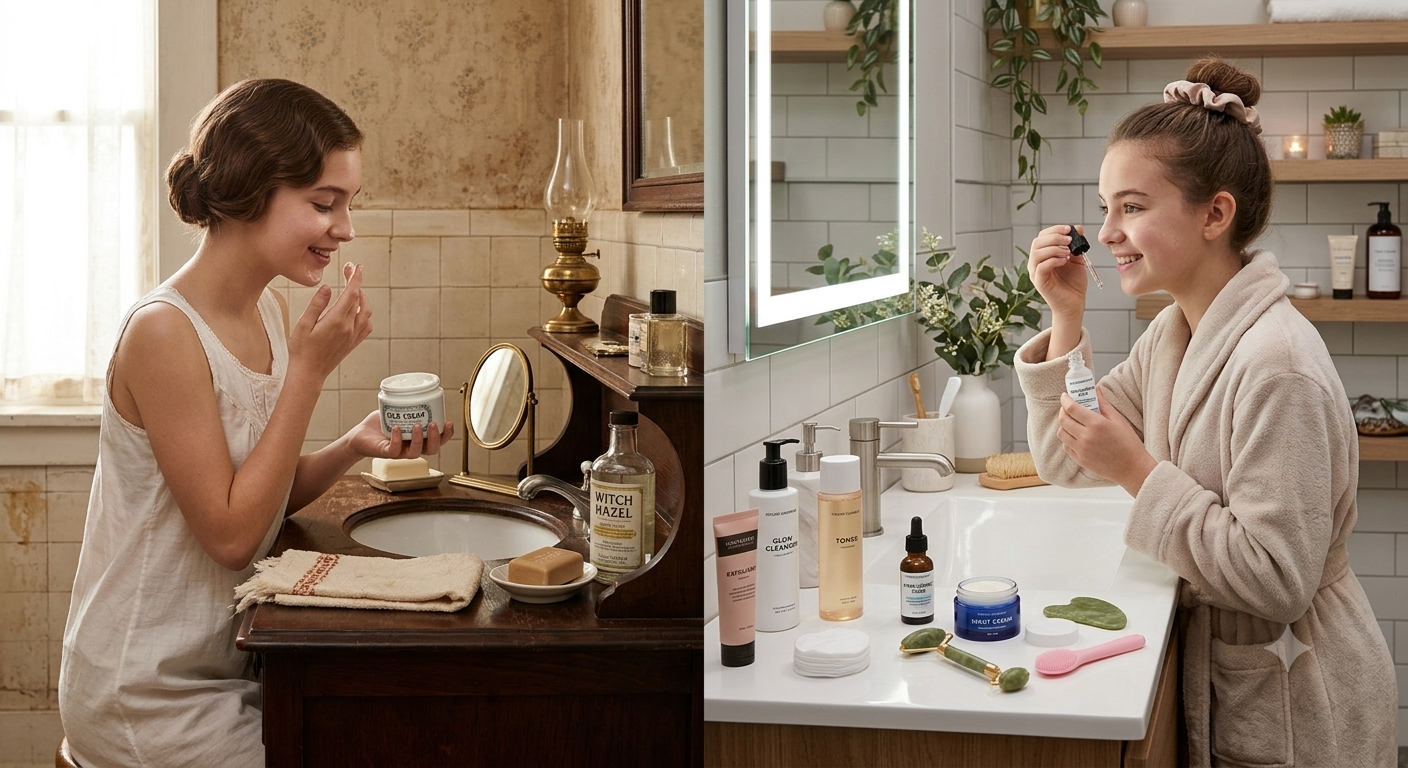

For decades, popular skincare advice was dominated by multi-step trends, harsh physical scrubs, and aggressive DIY remedies like applying lemon juice or toothpaste to blemishes. Marketing pushed the idea that the more products you piled onto your face, the better your skin would look.
However, dermatological science has shifted dramatically over recent years.
Today, expert consensus rejects complicated 10-step regimens in favor of skinimalism—a streamlined, evidence-based approach focused on protecting the skin barrier, repairing damage, and maintaining biological balance.
Understanding how modern skincare science has evolved can help you ditch overhyped trends, save money, and build a safe, highly effective routine for vibrant, healthy skin at any age.
1. From Harsh Scrubs to Barrier Protection
The Old Approach:
In the late 1990s and early 2000s, skin care heavily prioritized aggressive exfoliation using rough walnut shell scrubs and high-alcohol astringents to strip away natural oils. The belief was that a “squeaky clean,” tight sensation meant clean skin.
The Scientific Evolution:
Modern dermatologists now emphasize the vital role of the skin barrier (stratum corneum) and the skin microbiome.
-
Stripping away natural lipids damages the protective lipid matrix, leading to chronic inflammation, redness, moisture loss, and premature aging.
-
Healthy skin relies on a balanced ecosystem of good bacteria that guards against environmental pathogens.
The Science-Backed Habit:
Switch from harsh physical scrubs to gentle, pH-balanced cleansers. Look for formulas containing ceramides, fatty acids, and niacinamide, which nourish and reinforce your skin’s natural moisture shield.
2. The Core 3: The Science-Backed Daily Essentials
While the beauty industry constantly promotes shiny new ingredients, clinical research confirms that a successful skincare routine rests on three non-negotiable pillars:
┌─────────────────────────────────────────────────────────────┐
│                    THE CORE THREE PILLARS                   │
├───────────────────┬───────────────────┬─────────────────────┤
│   1. CLEANSE      │   2. MOISTURIZE   │    3. PROTECT       │
│   Gentle, non-    │   Hydrates and    │    Broad-Spectrum   │
│   stripping       │   locks in water  │    Sunscreen (SPF)  │
└───────────────────┴───────────────────┴─────────────────────┘
1. Gentle Cleansing (Morning & Evening)
Cleansing removes dirt, pollutants, excess sebum, and sunscreen. Over-cleansing ruins the barrier; washing once or twice daily with lukewarm water and a mild gel or cream cleanser is sufficient for most skin types.
2. Targeted Moisture (Hydration & Occlusion)
Moisturizers serve two distinct roles:
-
Humectants (e.g., Hyaluronic Acid, Glycerin) draw water into skin cells.
-
Emollients & Occlusives (e.g., Squalane, Ceramides, Plant Oils) seal that hydration in and smooth out the texture.
3. Broad-Spectrum Sunscreen (The Ultimate Anti-Aging Step)
Up to 80% of visible facial aging—including fine lines, dark spots, and loss of elasticity—is caused by cumulative exposure to ultraviolet (UV) radiation (photoaging).
-
The Rule: Apply a broad-spectrum SPF 30 (or higher) every single morning, even on cloudy days or when staying near windows indoors. Sunscreen is not just for summer beach days; it is the single most effective preventative anti-aging habit available.
3. Evidence-Based Active Ingredients That Actually Work
Instead of cluttering your bathroom counter with dozens of serums, focus on ingredients backed by decades of peer-reviewed clinical trials:
Retinoids (Vitamin A Derivatives)
-
The Gold Standard: Retinoids (such as prescription Tretinoin or over-the-counter Retinol) accelerate cell turnover and stimulate collagen synthesis deep within the dermis.
-
Benefits: Smooths fine lines, improves skin texture, fades hyperpigmentation, and unclogs pores.
-
How to Use: Apply a pea-sized amount at night on completely dry skin, starting 2–3 times a week to avoid irritation.
Vitamin C (L-Ascorbic Acid)
-
The Antioxidant Shield: Vitamin C neutralizes free radicals generated by UV light and air pollution, while inhibiting melanin overproduction.
-
Benefits: Brightens dull complexions, fades dark spots, and works synergistically with sunscreen to boost photoprotection.
-
How to Use: Apply a few drops in the morning before moisturizer and sunscreen.
Chemical Exfoliants (AHAs & BHAs)
-
AHA (Alpha Hydroxy Acids, like Glycolic or Lactic Acid): Water-soluble acids that dissolve dead cells on the skin’s surface, ideal for dry or sun-damaged skin.
-
BHA (Beta Hydroxy Acid / Salicylic Acid): Oil-soluble acid that penetrates deep into pores to dissolve trapped sebum and dead skin, making it ideal for oily or acne-prone skin.
-
How to Use: Limit usage to 1–2 nights per week to prevent over-exfoliation.
4. Lifestyle Factors: The Internal Drivers of Skin Health
No topical product can compensate for poor internal habits. Dermatological science highlights four key lifestyle pillars that directly influence skin appearance:
-
Sleep & Cellular Repair: During deep sleep, growth hormones peak, triggering cellular repair and collagen production. Chronic sleep deprivation elevates cortisol, breaking down collagen.
-
Hydration & Diet: Consuming adequate water supports skin turgor. A diet rich in antioxidants, healthy fats (Omega-3s), and low in refined sugars helps prevent glycation—a chemical process where sugar molecules damage collagen fibers.
-
Stress Management: Stress increases systemic inflammation and triggers sebum overproduction, aggravating conditions like acne, eczema, and rosacea.
-
Smoking & Alcohol Avoidance: Smoking constricts micro-blood vessels, depriving skin cells of oxygen, while excess alcohol dehydrates tissue and worsens facial redness.
A Simple 3-Step Starter Routine
If you want to strip away complexity and rebuild your skin health on a solid foundation, follow this straightforward template:
Morning (AM)
-
Cleanse: Water wash or gentle gel cleanser.
-
Treat/Moisturize: Vitamin C serum followed by a light moisturizer (or a hydrating moisturizer alone).
-
Protect: Broad-spectrum SPF 30+.
Evening (PM)
-
Cleanse: Gentle cleanser to remove SPF and daily grime.
-
Treat: Retinoid or Chemical Exfoliant (on alternate nights).
-
Moisturize: Barrier-repairing night cream containing ceramides or hyaluronic acid.
Final Thoughts
Skin health is a marathon, not a sprint. The secret to radiant skin is not found in expensive 10-step routines or miraculous overnight claims, but in consistency, barrier protection, daily sun safety, and simple science-backed habits.
By honoring your skin’s natural biology and keeping your routine simple, you can achieve a healthy, glowing complexion that lasts a lifetime.