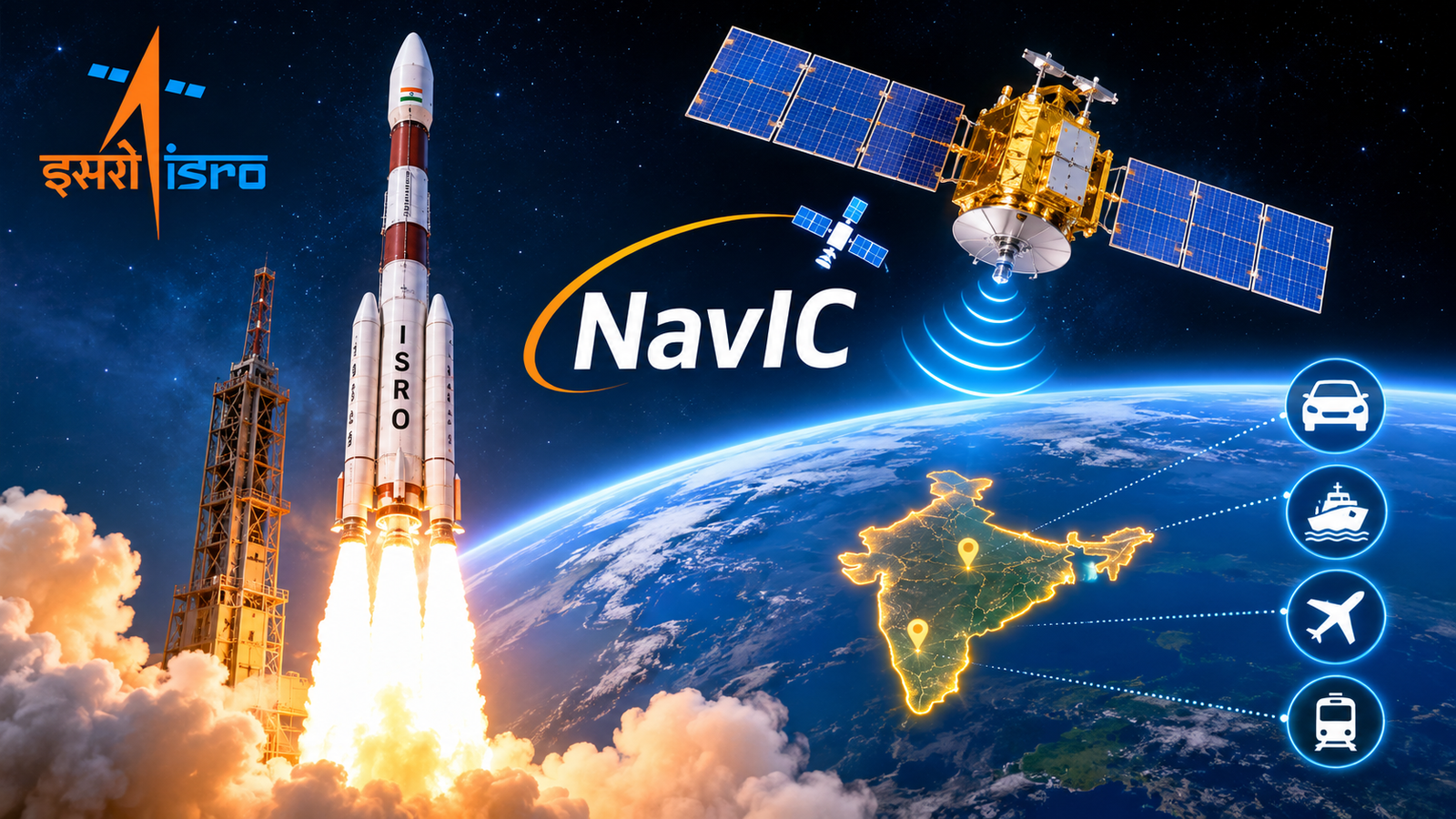

The Indian Space Research Organisation (ISRO) has taken another major step toward boosting India’s independent satellite navigation ecosystem. With the successful launch of the NVS-03 navigation satellite aboard the GSLV rocket, India has further strengthened its indigenous NavIC (Navigation with Indian Constellation) network.
This mission introduces essential upgrades, including a home-grown atomic clock and civil-friendly L1 navigation signals. As space-based positioning becomes integral to civilian logistics, smart technology, and defense infrastructure, the launch of NVS-03 marks a crucial milestone in reducing reliance on foreign GPS platforms.
Here is a detailed look at what NVS-03 brings to the table and why it matters for India’s technological independence.
What is the NVS-03 Satellite?
NVS-03 is the third satellite in ISRO’s Next-Generation Navigation Satellite (NVS) series, designed to replace older first-generation IRNSS spacecraft and significantly upgrade the capabilities of the regional NavIC constellation.
Placed into a Geosynchronous Transfer Orbit (GTO) prior to reaching its operational slot, NVS-03 ensures uninterrupted, highly accurate positioning, navigation, and timing (PNT) services across the Indian mainland and a regional envelope extending up to 1,500 kilometers beyond its borders.
3 Game-Changing Features of the NVS-03 Mission
1. High-Precision Indigenous Atomic Clock
Satellite navigation relies entirely on extreme time measurement accuracy. Previous-generation satellites used imported Rubidium atomic clocks, some of which experienced technical failures over time. NVS-03 incorporates a Space Applications Centre (SAC)-developed indigenous Rubidium Atomic Frequency Standard (iRAFS).
This domestic atomic clock tech ensures high accuracy down to nanoseconds, safeguarding long-term operational resilience without dependence on overseas component suppliers.
2. Introduction of the L1 Signal Band
Legacy NavIC satellites primarily operated on the L5 and S bands. While robust, these frequencies were not standard across everyday consumer electronics like basic smartphones.
NVS-03 reinforces the L1 frequency band—the universal standard used by global civilian positioning systems. This addition paves the way for seamless integration into everyday smartphones, vehicle telematics, wearable tech, and commercial drone navigation without requiring specialized receiver chips.
3. Extended Operational Lifespan
Built on ISRO’s standard I-2K satellite bus structure, NVS-03 is engineered for an extended operational life of 12 years or more. Equipped with enhanced power generation and improved orbital maneuvering thrusters, it guarantees long-term stability for regional positioning services.
Why NavIC Independence Matters for India
While everyday users rely on systems like GPS (United States), GLONASS (Russia), or BeiDou (China), having a dedicated national navigation network provides two main strategic benefits:
-
Strategic Sovereignty: In times of geopolitical conflict, access to foreign navigation systems can be throttled or restricted. NavIC gives India’s military, disaster response forces, and maritime operators an unhindered, secure positioning system.
-
Geographical Precision: Optimized specifically for the Indian subcontinent, NavIC delivers superior positional accuracy in dense urban areas and difficult topographies compared to global networks designed for worldwide coverage.
The Road Ahead for Indian Satellite Navigation
With NVS-03 joining the constellation, ISRO continues to build momentum toward full commercial and civilian adoption of NavIC. As regulatory bodies encourage device manufacturers to incorporate L1/L5 dual-band receiver support into upcoming hardware, everyday users will soon experience faster, more accurate mapping and location services powered directly by Indian satellites.
ISRO’s ongoing NVS satellite deployments underscore India’s growing self-reliance in space technology—proving that precision, innovation, and national infrastructure can be developed right at home.